
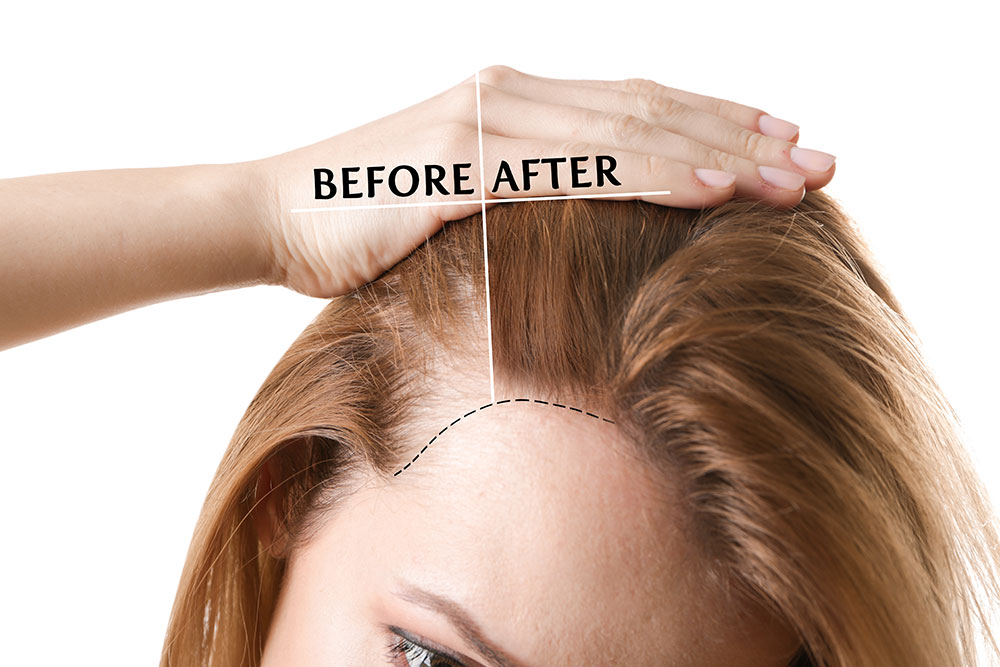
Female Hair Transplant – Regain Your Confidence with Natural Hair Restoration
Understanding Female Hair Loss
Hair loss in women can appear differently from men. While men usually develop bald patches or receding hairlines, women often experience diffuse thinning, particularly around the crown and temples.
Common causes include:
Hormonal changes (pregnancy, menopause, thyroid disorders)
Genetic predisposition (Female Pattern Hair Loss)
Stress and nutritional deficiencies
Scalp infections or autoimmune conditions
Excessive hairstyling or chemical treatments
Post-surgical or post-traumatic hair loss
Unlike temporary shedding, chronic hair thinning often requires medical and surgical intervention to restore density. Our expert dermatologists and trichologists specialize in diagnosing the root cause and designing a personalized hair restoration plan for every woman.
What Is a Female Hair Transplant?
A female hair transplant is a minimally invasive surgical procedure that moves healthy hair follicles from the donor area (usually the back or sides of the scalp) to thinning or bald regions. These transplanted follicles continue to grow naturally for a lifetime.
At our clinic, we focus on precision, aesthetics, and natural results. The transplanted hair blends seamlessly with your existing strands, enhancing your appearance and boosting your confidence.
Types of Hair Transplant Techniques We Offer
Our clinic uses the latest technologies in follicular unit transplantation (FUT) and follicular unit extraction (FUE) to provide long-lasting, scar-free outcomes.
1. Follicular Unit Extraction (FUE)
In FUE, individual hair follicles are carefully extracted from the donor area and implanted into thinning regions.
Benefits:
No visible scarring
Quick recovery time
Ideal for women with tight scalps or short hair
2. Follicular Unit Transplantation (FUT)
In FUT, a thin strip of skin containing hair follicles is removed and dissected into individual grafts for transplantation.
Benefits:
Suitable for large coverage areas
Higher graft yield in one session
Natural density and volume restoration
3. Direct Hair Implantation (DHI)
A more refined version of FUE, DHI uses a specialized implanter pen to directly place grafts into the scalp without prior incisions.
Benefits:
Maximum control over angle, depth, and direction
Faster healing
Natural hairline creation
4. Combination Techniques
For some patients, a blend of techniques offers the best results—especially when balancing density, volume, and natural appearance. Our specialists customize every treatment to suit your individual needs and goals.
Ideal Candidates for Female Hair Transplant
You may be an ideal candidate for a hair transplant if you:
Have thinning on the top or front of your scalp
Have stable donor hair at the back or sides of your head
Suffer from traction alopecia (due to tight hairstyles)
Have hair loss from injury or surgery
Are in good general health with realistic expectations
Our dermatologists conduct a detailed scalp analysis, trichoscopy, and blood tests before recommending the best procedure for you.
Our Step-by-Step Treatment Process
Consultation & Diagnosis:
A detailed examination to assess your hair loss pattern, donor density, and underlying causes.Customized Planning:
The doctor designs a personalized treatment plan, including the number of grafts required and the expected coverage area.Hairline Design:
Special attention is given to create a soft, feminine hairline that complements your facial features.Transplant Procedure:
The chosen technique (FUE/FUT/DHI) is performed under local anesthesia for a painless experience.Post-Procedure Care:
You receive clear aftercare guidelines, medications, and follow-up appointments to ensure optimal healing and growth.Hair Growth & Results:
New hair starts to grow naturally after 3–4 months, with full results visible in 9–12 months.
Why Choose Our Clinic for Female Hair Transplant?
Experienced Dermatologists & Trichologists:
Our specialists have years of expertise in female hair restoration, ensuring safe and effective results.Advanced Equipment & Techniques:
We use FDA-approved technologies for precision, comfort, and natural-looking outcomes.Natural Hairline Design:
Every transplant is customized to match the patient’s facial proportions and aesthetic preferences.Scar-Free & Painless Procedures:
Our minimally invasive methods allow for quick recovery with minimal discomfort.Confidential & Supportive Environment:
We understand the emotional impact of hair loss and ensure complete privacy and compassionate care.High Graft Survival Rate:
Each follicle is handled with utmost care to maintain viability and ensure lasting growth.
Post-Transplant Care
Proper post-procedure care is crucial for achieving long-lasting, natural results.
Avoid washing the scalp for the first 48 hours.
Use only prescribed mild shampoos and medications.
Avoid direct sunlight, heavy workouts, or tight hairstyles for a few weeks.
Attend scheduled follow-ups for progress monitoring.
With the right care and guidance, transplanted hair continues to grow naturally—just like your original hair.